When Trafficking Wears the Language of Love: Re-thinking the Orphanage System in Haiti
Author: Dr. Mackynzie (Mac) Archer
Executive Summary
In Haiti, trafficking is often imagined through its most visible forms: children moved across borders, sexual exploitation, kidnapping, armed recruitment, or forced domestic labor (restavek in Kreyol). These are real and urgent harms. But there is another form of child exploitation that is less visible, less often named, and therefore more difficult to confront directly: the way orphanages can become spaces of subtle trafficking under the guise of caring.
This is precisely what makes the issue so difficult. Orphanages are rarely introduced as sites of harm. They are framed as care. As a response to poverty, insecurity, and abandonment. They are supported by donor and volunteer networks as evidence that someone is doing something for vulnerable children. Yet this moral framing can conceal a more troubling reality: children who have families, kin networks, and communities are recruited or placed into institutions not because they are “orphans” in the strict sense, but because the orphanage economy has created financial incentives to place children inside institutions. When in fact, 80% of children in orphanages in Haiti have at least one living parent or family member who could potentially care for them.
Key Terms:
-
According to Haitian antitrafficking laws- Loi sur la Lutte Contre la Traite des Personnes. Article 1.1.1 “prohibits the coercion, recruitment, transport, and harboring of child for the purposes of exploitation.”
-
Orphanage trafficking is the recruitment, transfer, or harboring of children from their families into residential care facilities or orphanages for the purpose of financial profit or exploitation
-
Orphanage tourism / voluntourism serves as a critical mechanism to attract and retain international donors by facilitating direct contact between children and current or prospective donors. Facilities may keep conditions poor or recruit children from families to maintain a steady flow of paying tourists and donations.
-
A restavèk (or restavec) is a child in Haiti who is sent away by their parents to live with a host household as a form of informal adoption because the parents lack the resources required to support the child.
-
IBESR (Institut du Bien-Etre Social et de Recherches) is the Haitian Central Authority for intercountry adoption and the primary regulatory body for child protection and social welfare in Haiti. Operated under the Ministry of Social Affairs and Labor (MAST), it is headquartered in Port-au-Prince and is responsible for accrediting orphanages, approving adoption families, and managing child permanency
Background: The Creation of the Orphanage Economy within Politics of Care
The orphanage, as an institutional forum, arrived in Haiti embedded in a long history of missionary and donor involvement in child care in response to emergencies or times of insecurity. Prior to the 1980s, orphanages in Haiti were rare, with one of the first documented orphanages, The Good Shepard, legally opening in 1962. During the 1980-90’s AIDS epidemic, orphanages became a popular shelter for children either suffering from the disease or orphaned by it. However, it was not until the 2010 earthquake, killing an estimated 300,000 people and flooding Haiti with humanitarian aid, that Haiti became a prime destination for missionaries and faith-based aid. With an estimated 754 orphanages operating in Haiti at any given time, 90% are faith-based institutions, and 92% of their funding comes from North America, with up to 70 million dollars funneled in annually.
Estimated Orphanages in Haiti
After the earthquake, Haiti saw a 150% increase in orphanages in a year, and as of 2026, 15% are registered with the Haitian Government. The missionary trifecta of building a school, church, and orphanage became a standard form of childcare for vulnerable children and a business model based on monetizing religious beliefs to care for the less fortunate and perform benevolent acts. Faith-based humanitarian aid, unlike NGO practices, uses acts of faith and the church’s magnanimous responsibilities to plan, structure, and implement interventions. This notion of good intentions is what makes monitoring and measuring the orphanage system a challenge. Thus, the success of the orphanage is measured by the number of children cared for in the facility. As a consequence of this, orphanages are seen as spiritual boarding homes by many Haitian families suffering in impoverished conditions, and the orphanage serves as an extension of the church’s services. It is this narrative of “rescuing a child” that becomes tricky, blurring the lines between what people argue is an act of their religious obligations and what legal process is required.
“Trafficking framed through the language of love, care and rescue reveals something disguised: the persistence of neo-colonial beliefs that position poor Haitian families as incapable of care in terms of how Westernized standard practices deem appropriate, and that foreign religious intervention, in the form of placing a child in an orphanage, becomes morally more acceptable as the first response method rather than a last resort.”
Kinship Systems and the False Orphanhood
It is important to emphasize that childcare practices cannot be reduced to a narrow, Euro-American nuclear model, which may ignore traditional and culturally rooted child-care norms. As such, care in Haiti often moves through extended family, neighbors, godparents, and fictive kin. Childcare is social, relational, and distributed within families and communities. Reunification efforts and child welfare models that fail to understand this risk demeaning Haitian families as broken when, in fact, they may be functioning through broader communal logistics.
80% of children in orphanages in Haiti have at least one living parent
This is one of the main reasons orphanages have been so destructive. They do not just remove children from their parents. They remove them from the wider web of social belonging that organizes identity, obligation, and deeply rooted care practices. When international actors describe orphanages as a solution, they often ignore that 4 out of every 5 Haitian children in orphanages have one or both parents alive, or could remain in kin-based care if those families had the material support to sustain them.
With decades of research on the global orphanage system, studies have proven that children who grow up with their families or fictive kinship (foster care) versus in institutional facilities are not only more sustainable, but children thrive more in all developmental aspects.
For example, the Bucharest Early Intervention Project conducted research starting in 2000 and is ongoing, and found data supporting that children placed in family-based care had higher IQs, as well as better outcomes across attachment assessments, stress responses, emotional and physical development, and healthy brain development. Also, RAPHA International conducted a study in Haiti on reintegration efforts and impacts on childhood development, citing that even smaller orphanages with fewer children could not replicate or replace a familial structure. Lastly, Overture Outreach International’s reintegration program with ESPWA Orphanage between 2019 and 2023 indicates that three years after reunification, all 252 children remain with their families. Their program support shows how redirecting funding from orphanages to family preservation initiatives is not only successful but sustainable.
Consequently, many families who have been left with no options or separated from extended kinship ties that helped with child care responsibilities feel that orphanages can provide immediate care for their children in zones not yet controlled by Viv Ansanm. This perspective by families can be similar to views on temporary boarding homes, where families are told their children will receive basic needs plus school assistance.
The last national orphanage assessment, conducted by IBESR and partner organization LUMOS in 2018, assessed 400 surveyed orphanages out of 754; only 35 met legal criteria to operate and house children, and only 113 were registered with IBESR. The estimated number of children residing in orphanages is 30,000, but due to a lack of monitoring capacity, the number in 2026 is expected to be higher. If only 35 orphanages meet the legal standard for operating and only 113 are properly registered, then evidence suggests that 24,000 (80% of children with 1 or both living parents) of the 30,000 children living in orphanages have been placed without proper legal oversight, with IBESR or documentation monitoring the children’s whereabouts simply because the orphanages are not legally operable.
As Viv Ansanm ramped up attacks in early 2024, IBESR’s official office, located in the Lalue neighborhood of the Metropolitan area, was taken over by people fleeing gang violence, destroying documents, and paralyzing IBESR operations for several months, forcing them to relocate. As a result, monitoring and tracking cases have become nearly impossible, with most of the monitoring taking place on WhatsApp. The inability of IBESR to regulate orphanages in certain gang-controlled areas after the formation of Viv Ansanm in 2024, nor to supervise orphanages that are displaced by violence, makes trafficking children inside these facilities and elsewhere a greater risk. Furthermore, resources allocated by the Haitian government amount to only 1.8% of the total budget, at 5.5 million USD, leaving major resource gaps in IBESR’s ability to perform basic monitoring duties.
In an interview conducted during fieldwork, Child Protection Specialist and founder of Overture Outreach International, who has been working in Haiti since 2020, stated, “For every one orphanage IBESR knows about, registered or not, there are 2 or more that they do not.” As a result of these information gaps, it is nearly impossible to track exactly how many orphanages there are in Haiti and where they are operating. The issue at hand is that protection in this system becomes centered around the institution’s financial gains by separating a child from their family rather than on helping communities that keep them connected. This gap in social services is then exploited by the orphanage system, which can generate a narrative that uses the inability of IBESR to uphold their responsibilities as the state as a reason to fill in the void left, as well as promote a false narrative that poor families are unqualified to care for their own children.
Mechanisms of Orphanage Trafficking
The Orphanage industry uses various techniques when it comes to attracting donors. Mainly, donors have to feel that their money goes towards something or someone in need. This relies on donors being told a narrative that plays into their empathy to help. This narrative is constructed in several ways.
The first is misrepresentation. A child with a family is presented as abandoned, parentless, or more socially disconnected than they really are. This makes the child more legible to donors and more fundable within the rescue economy. What research shows is that children living in impoverished conditions are placed into orphanages as economic orphans rather than true orphans.
The second is recruitment through vulnerability. The 1971 IBESR Decree Article 23, along with the United Nations Guidelines for Alternative Care for Children, both state that poverty cannot be a reason for placement into an orphanage. Yet, it has become the main indicator for placing a child in an orphanage. Families under pressure from hunger, unemployment, insecurity, or displacement may be persuaded that placement is the only viable option. In this sense, coercion does not always look like force. It can look like a constrained choice. A mother may “agree” to place her child in a home because the alternative is hunger or no school. But consent under extreme deprivation is not only illegal, but evidence of a corrupt system.
The third is institutional retention. Once children enter orphanages, temporary placement easily becomes prolonged separation. Parents may visit only intermittently because travel is expensive or because the institution controls contact. However, as children grow up in orphanages, record-keeping and registration of those children and connections to family become harder to trace. These placements frequently occur outside regulated pathways, meaning children enter institutions without birth records, case files, falsified identities, or traceable links to their families. When a child turns 18 and “ages out” of the orphanage, they are often left without anywhere to go and become prime recruits for criminal organizations like “Viv Ansanm.”
Evidence suggests that what takes place is less about institutional neglect and more about systemic nuances that make up the orphanage system itself. As institutions move, records are lost, names change, and the possibility of reunification becomes more difficult. Thus, children can effectively disappear within networks of care that operate beyond oversight, essentially being displaced and relocated within the system meant to protect them. Other risks increase once a child is placed into the orphanage, expanding on criminal market opportunities that create a broader network of illicit economies tied to so-called humanitarian intervention.
Case Studies
The hidden violence of orphanage systems does not end with recruitment and placement. It is often only the beginning. Without regulation and consistent check-ins for assessment by IBESR and other child protection actors, orphanages are able to provide whatever standard of care they choose, even at the expense of the children’s well-being.
For example, in 2010, 10 missionaries from the New Life Children’s orphanage were charged by the Haitian government for attempted trafficking of 33 children from their orphanage into the Dominican Republic. The children had been placed in the orphanage days earlier after the earthquake by their parents, who were told the children would be cared for but never mentioned taking the children outside of Haiti. The missionaries claimed their plan was to bring them to an orphanage in the Dominican Republic, saving them from the humanitarian crisis post-quake. From the moment the children were placed in the hands of the orphanage to the moment they were driven to the border without notifying IBESR, each step is legally defined as trafficking of a minor. Even where there is no sensational criminal prosecution, orphanages may still expose children to neglect, coercion, surveillance, and the everyday indignity of being made visible as needy for the sake of donor support.
According to the 2021 Findings on the Worst Forms of Child Labor, Haiti had an estimated 286,000 children under 15 who were engaged in domestic work, many within exploitative restavèk systems characterized by physical abuse, sexual exploitation, and uncompensated labor, many being funneled through orphanages and sent to neighbors in the community.
The 2023 U.S. Trafficking in Persons Report highlights how unlicensed “orphanage entrepreneurs” exploit Haiti’s weak child protection system for trafficking and financial gain. The report further identifies children in private and NGO-sponsored residential care centers as particularly vulnerable to trafficking, forced labor, and sexual exploitation.
There are also direct risks of abuse. Global child protection organization, Better Care Network, reports that children living in institutions were four times more likely to experience sexual abuse than children residing in the care of their own families.
A series of high-profile abuse and trafficking cases linked to orphanages and missionary networks in Haiti has exposed how vulnerable children can be exploited under the guise of humanitarianism and faith-based care. In one recent U.S. federal case, former Ohio missionary Jeriah Mast was indicted for allegedly sexually abusing minors in Haiti over multiple years while traveling through missionary programs. Similarly, Michael Geilenfeld, founder of the St. Joseph’s Home for Boys orphanage in Haiti, was convicted in U.S. federal court and sentenced to 210 years in prison after multiple Haitian survivors testified that he sexually abused boys living under his care for years.
Using position of authority and humanitarian access to exploit vulnerable children. Together, these cases demonstrate how weak oversight, dependency on foreign-funded orphanages, and the humanitarian framing of “rescue” can create environments where abuse, trafficking, and exploitation remain hidden behind charitable narratives. These cases demonstrate how the legislative process, while in place, may be ineffectively implemented, if it is possible to be implemented at all.
Haitian Legislation
Haiti has legislation and mandates in place for confronting trafficking. The Act of 7 May 2003 on the prohibition and elimination of all forms of abuse, violence, ill-treatment, or inhumane treatment against children is recognized in international reporting on Haiti’s child protection framework. Haiti is also bound by the Convention on the Rights of the Child, which requires protection against abduction, sale, trafficking, sexual exploitation, and abuse.
The first official decree by IBESR in 1971 established a legal framework and standard operating procedures for orphanages in Haiti. It mandates that any facility is legally bound to obtain accreditation from IBESR and meet the minimum standards of care outlined. It also details documentation and monitoring of facilities; meaning every orphanage must obtain the following in order to place a child in their care: full name, date of birth, photo and ID of individual placing the child in the orphanage and relationship to the child, reason for placement, letter of abandonment in the case of non- biological parents, contact information of where and who they resided with prior to placement in the orphanage, and parental consent. Without any one of these procedures completed, the orphanage cannot place a child in its care. If a child is placed without these, the orphanage is not operating with legal authorization.
In 2014, Haiti adopted the Loi sur la Lutte Contre la Traite des Personnes. The law criminalizes trafficking and provides penalties, including prison terms and fines, stating that in Article 1.1.1 it “prohibits the coercion, recruitment, transport, and harboring of a child for the purposes of exploitation”. The law exists precisely because trafficking in Haiti cannot be treated as an informal social problem or left to charity actors to solve.
Under the United Nations Guideline for Alternative Care for Children, residential care is defined as a last resort, limited to cases where removal from the family is necessary and extended family options are not available. The guidelines also prohibit the creation of an orphanage for the purpose of furthering political, religious, and economic goals. As a response to the increase in illegally operating orphanages, the Haitian government passed a mandate in 2018 that made creating new orphanages illegal and required all orphanages operating in Haiti to register by June 2019 or face being closed by IBESR.
By 2023, Haiti was moved to Tier 2 (watchlist) by the U.S Trafficking in Persons List, but as of 2025, it has been raised to Tier Special Case, noting the increase in trafficking by gangs and other criminal actors, while acknowledging the extreme lack of monitoring and empirical data on orphanage trafficking.
In this case, the act of caring for a child becomes the vehicle for trafficking. What makes this a form of trafficking is simple: unregistered institutions taking in undocumented children. The moment the child enters the grounds of the orphanage, they have been, by legal definition, trafficked. The problem, then, is not an absence of law. It is enforcement, lack of resources to monitor and track orphanages, regulation methods, and the unwillingness of the humanitarian sector to interrogate child-care models that are normalized because they are wrapped in religious benevolence.
Government and Humanitarian Initiatives
The interventions that keep Haitian children out of orphanages are less costly than it is to operate an orphanage. However, the main challenge for anti-orphanage initiatives is donor mentality. For donors, the children being cared for are proof that their charitable giving has been meaningful. Switching to family-centered models of care is possible; it just takes educating donors on what reality their money is funding. As of 2026, there are many initiatives in Haiti focused on family-based care, proving through their programs that children do better growing up in families.
For example, Little Footprints Big Steps has been working in the south of Haiti since 2013, documenting its unit costs for the family stabilization program, which provides material support in the form of: $100 for an agricultural kit, $500 for school tuition, and $700 for a small business start-up. These resources annually help counter financial and household stressors, including childcare expenses. Similarly, Overture Outreach International has helped reunite 470 children with their families and provided school sponsorship to 1,250 kids. Haiti Care Network, consisting of child protection practitioners, researchers, organizations, and child rights advocates, acts as an information hub, providing resources that educate donors on the realities of orphanage practices and the harmful impact living in an orphanage has on children and families.
Each of these organizations emphasizes that if the millions of dollars sent by donors and churches annually could be redirected to family-based care support, the need to place children in an orphanage would decrease, making orphanages an unprofitable business. These partner organizations help facilitate capacity support to IBESR to help carry out their responsibilities, while reinforcing laws through accountability and transparency practices within the orphanage system. The work they are doing in collaboration with IBESR proves that family-centered care is not only possible but more effective.
Recommendations: What Should Replace the Orphanage Model?
1. Establish a National Child Protection Monitoring and Reporting System
The Government of Haiti, through IBESR, in collaboration with partners UNICEF, the International Organization for Migration (IOM), anti-trafficking organizations, and Haitian civil society actors, should establish a nationwide child protection monitoring and reporting system focused specifically on residential care institutions and child trafficking risks. Current monitoring mechanisms are critically inadequate. The IBESR “133” hotline is no longer consistently functional and, even when operational, primarily serves Port-au-Prince, leaving rural departments and conflict-affected zones without effective reporting pathways. A national system should include:
A centralized and digitized child protection database tracking all children placed in institutional care, family reunification programs, foster placements, and cross-border movement cases.
Mandatory registration and identity-linked documentation for all residential care facilities and children housed within them.
Department-level rapid response units capable of conducting unannounced inspections and responding to allegations of abuse, trafficking, disappearance, or illegal child transfers.
Community-based reporting mechanisms, including local protection committees, SMS reporting systems, community awareness trainings, and multilingual hotlines accessible beyond Port-au-Prince.
Independent oversight partnerships with Haitian human rights organizations and international child protection actors to ensure transparency and reduce corruption risks.
2. Transition Away from Institutional Care and Prohibit Unregulated Orphanages
The Haitian Government, in partnership with international and local organizations, should implement a national deinstitutionalization strategy, designed in stages over the course of a designated time period. The plan should focus on family strengthening initiatives, prevention and criminalization of orphanages, while initiating reunification and foster care efforts. Policy should include, but is not limited to, the following:
Immediate closure and criminal prosecution of institutions operating without IBESR authorization or in violation of child protection laws and anti-trafficking protocols.
Expansion of family reunification programs supported through economic assistance, education subsidies, psychosocial support, and community reintegration services.
Investment in Haitian-led foster care systems, kinship care arrangements, and traditional extended-family caregiving structures that preserve social and cultural ties.
Phase out most orphanages in the short to medium term period and keep the 1 IBESR state-run facility in each department for emergency response. The Number of state-run facilities per department would depend on the population size.
Invest in trauma-informed emergency training in schools, communities, government buildings, and spaces where children frequent.
Legal protections preventing children from being transferred between institutions without IBESR authorization and documented family tracing procedures.
Long-term donor transition strategies redirect international orphanage funding toward community-based child protection and family strengthening programs.
3. Criminalize Orphanage Tourism and Increase Accountability for Foreign Actors
The United States and other foreign governments should formally recognize orphanage trafficking and orphanage tourism as child protection risks linked to exploitation, trafficking, and abuse. Foreign nationals frequently establish, fund, volunteer in, or promote orphanages in Haiti without adequate oversight, background checks, or child-safeguarding mechanisms.
Governments should adopt policies similar to those implemented in countries such as Australia, which has formally recognized orphanage trafficking as a form of modern slavery. Australia’s 2018 Modern Slavery Act and subsequent government guidance discouraged orphanage voluntourism and identified institutionalization as a trafficking risk. Reducing foreign demand for orphanages is essential to dismantling the economic incentives that sustain institutionalization and child trafficking systems in Haiti. Additional international measures should include:
Criminal penalties for foreign nationals who establish, fund, recruit for, or volunteer in unlicensed orphanages operating outside Haitian law and IBESR regulations.
Mandatory due diligence requirements for NGOs, churches, universities, and mission organizations sending volunteers or funding residential care institutions abroad.
Restrictions on tax-exempt charitable status for organizations financially supporting unaccredited orphanages or orphanage tourism programs.
Public awareness campaigns warning against voluntourism practices that contribute to child institutionalization and trafficking risks.
Bilateral agreements support cross-border investigations into child exploitation, trafficking, and financial fraud linked to orphanage networks.
Conclusion
The argument at hand is that conditions of structural violence that facilitate the need to place children in an orphanage; poverty, recruitment by brokers, donor-dependent financing, and chronic oversight by the government constitute an exploitative system.
The orphanage economy was constructed within a capitalist aid architecture with faith-based donor incentives. This has led to a global system that takes advantage of poor families and exploits children in order to maintain the business of care. A repercussion of this economic drive is that children are illegally placed into orphanages, constituting trafficking of a minor for financial gain. For every child placed in an orphanage, their presence as a humanitarian recipient reinforces and legitimizes the orphanage's existence and the need to continue filling the facility with children, by whatever means necessary.
The Author
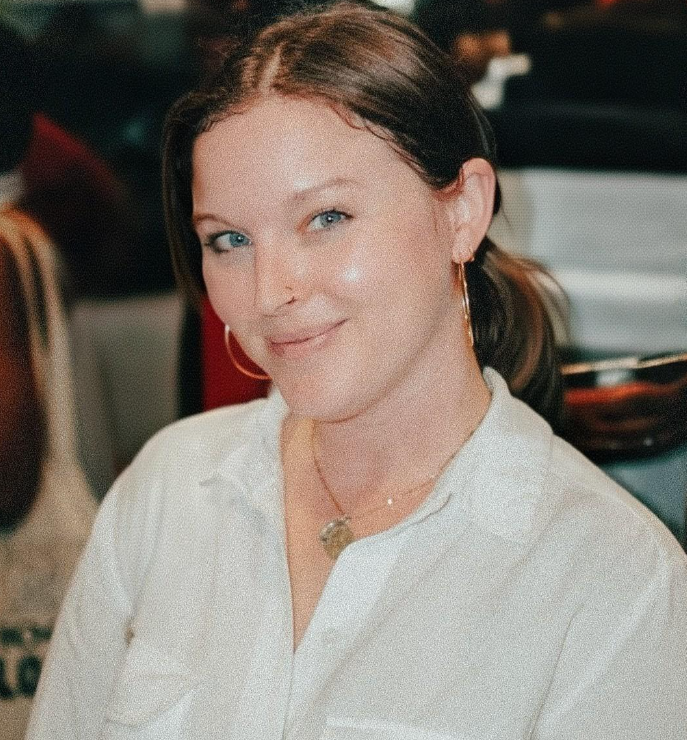
Dr. Mac Archer is an anthropologist based in Port-au-Prince, Haiti. Her work focuses on conducting investigative research into Haiti’s orphanage system and child protection response in conflict settings. Her research goals are to help write policy that not only raises awareness about the harmful impact orphanages have on children and families, but also dismantle the orphanage system in Haiti entirely.
Haiti Policy House is a not-for-profit institution focusing on Haitian public policy issues. Its research is nonpartisan. Haiti Policy House does not take specific policy positions. Accordingly, all views, positions, and conclusions expressed in this publication should be understood to be solely those of the author(s).
© 2026 by Haiti Policy House. All rights reserved.
Select language