July 2026 - Haiti Situation Brief
Key Developments and Analytical Digest
Key Developments
1. Armed-group pressure continues near Port-au-Prince, while Ouest remains the main center of lethal violence.
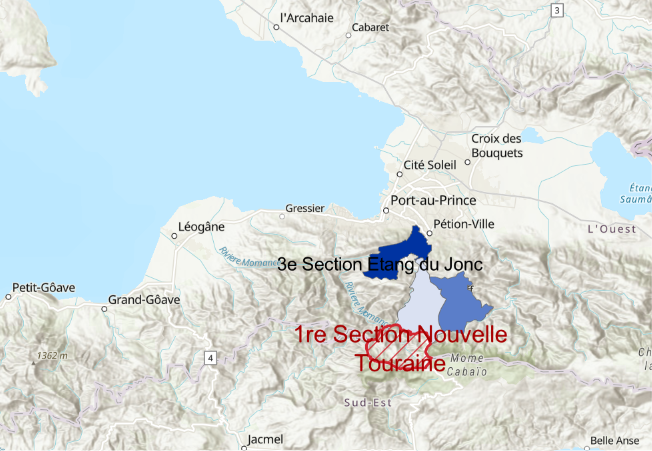
Kenscoff came under renewed attack starting July 5 until July 8, after local authorities warned of an imminent assault and requested stronger police presence, expanded patrols, and reinforcement of key access points. Reporting also notes repeated incursions by Viv Ansanm-linked actors into Kenscoff since January 2025 and displacement of residents.
Fatalities data reinforce the centrality of the capital region. Ouest accounts for 946 fatalities in 2026 YTD, or 63.7 percent of recorded fatalities. This confirms that Port-au-Prince and surrounding areas remain the main theater of lethal violence. However, fatality counts alone do not measure territorial control, civilian movement, service access, extortion, displacement-site conditions, or return and reintegration conditions.
Source: IOM
2. Artibonite remains the second major security theater, with implications beyond violence.
The March 29, 2026, massacre in Jean-Denis, attributed in reporting to the Gran Grif gang, left at least 70 civilians dead and forced thousands to flee. Artibonite accounts for 381 fatalities in 2026 YTD, or 25.7 percent of recorded fatalities nationally, making it the second-most affected department after Ouest.
This matters because Artibonite is central to agriculture, food supply, internal movement, and north-south connectivity. Violence there can affect rural livelihoods, displacement, transport routes, and market prices beyond the immediate sites of attack. The Jean-Denis massacre should therefore be read both as a human-rights concern and as an indicator of pressure on rural production zones and strategic corridors.
3. Lower fatalities should be assessed alongside access and service conditions.
The decline from the comparable 2025 period is significant, but it should be interpreted alongside access and protection indicators. Lower fatalities may reflect changes in operations, reporting, geography, displacement patterns, or armed-group tactics. They do not necessarily indicate improved civilian safety, functioning public services, or consistent state operations in contested areas.
Reporting on Kenscoff, Jean-Denis, Artibonite, the General Hospital, and displacement sites points to a crisis beyond fatality counts. Armed groups continue to affect civilian life through territorial pressure, road control, extortion, forced displacement, attacks on homes and public facilities, and restrictions on movement. Key indicators should include road access, hospital and school functionality, market activity, displacement conditions, and the ability of local authorities to operate without coercion.
4. Public services remain under pressure from insecurity.
From the end of June to early July, Medical students protested to demand the relocation and reopening of the University Hospital of Haiti, commonly known as the General Hospital. A student was shot by police officers during the protest. The hospital was closed in 2024 because of gang violence, attacked during an attempted reopening, and later set on fire in February 2025. Reporting states that about 70 percent of public health facilities were shuttered last year because of gang violence, affecting an estimated 4.4 million people.
The health system illustrates the broader access problem. Even when violence levels fall, public-service recovery depends on whether facilities can reopen safely, staff can travel, and patients can reach care without exposure to armed-group activity or police-gang clashes.
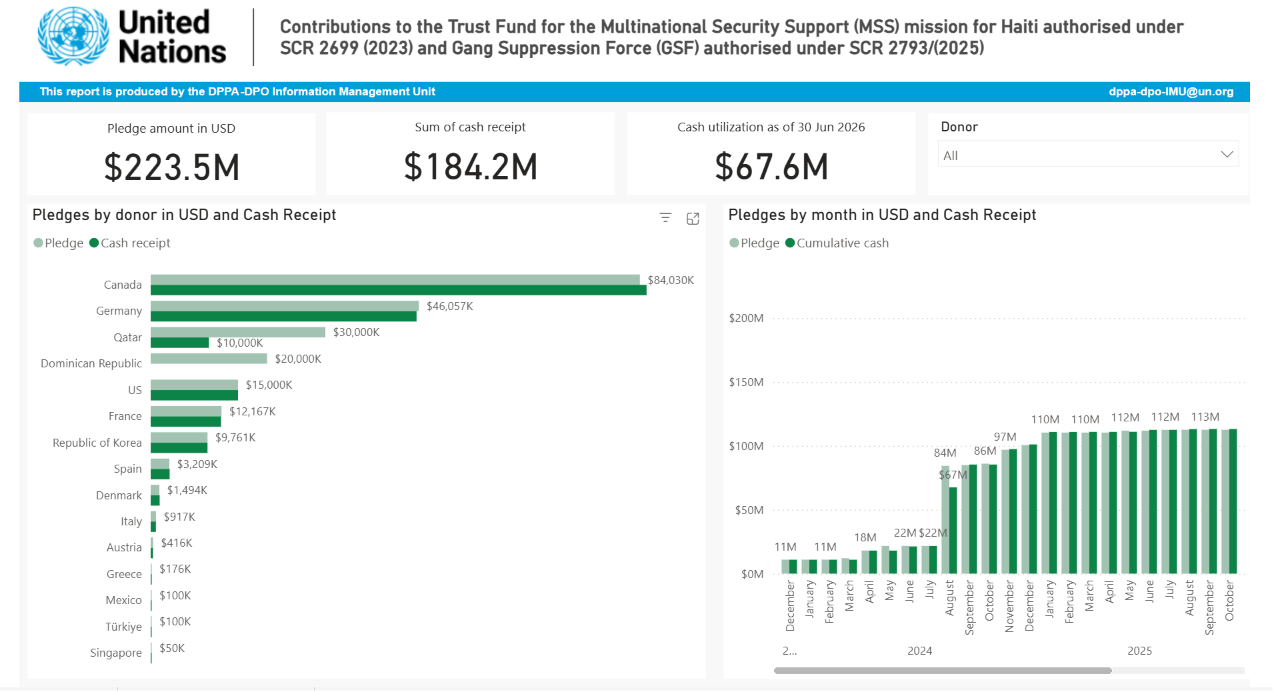
5. The Gang Suppression Force has defined measurable objectives, but implementation remains the test.
According to reporting on the Gang Suppression Force’s first strategic report to the UN Security Council, the mission has set objectives to reduce gang territorial control, secure critical infrastructure, and strengthen Haitian institutional capacity through September 2028. Indicators include joint patrols, dismantled checkpoints, operational bases, weapons seizures, arrests, corridor access, and security presence around infrastructure.
The strategy is more structured than previous mission frameworks because it defines objectives, indicators, baseline conditions, and a target date. Its effectiveness will depend on coordination with the PNH and FAd’H, sustained access after operations, civilian protection, accountability mechanisms, and on whether security gains translate into visible improvements in service and mobility. Sri Lanka is also expected to deploy 1,132 military and police personnel as part of the mission. However, concerns about accountability remain. Between 2004 and 2007, Amnesty International reported that over 100 peacekeepers were sent back to Sri Lanka following allegations of sexual abuse and exploitation. Available public records do not show that any Sri Lankan peacekeepers have faced criminal prosecution or conviction related to the 2007 Haiti sexual exploitation and abuse scandal.
A 2015 UN investigation into Sri Lanka (the OISL report) determined there were reasonable grounds to believe that rape and sexual violence by security forces were widespread, affecting both men and women during the country’s internal armed conflict. A report published this year by the OHCHR further points out that Sri Lanka still lacks the necessary systems to ensure accountability for conflict-related sexual violence.
Source: BINUH - https://psdata.un.org/dataset/DOS-MSSTrustFund
6. National Fuel price reduction
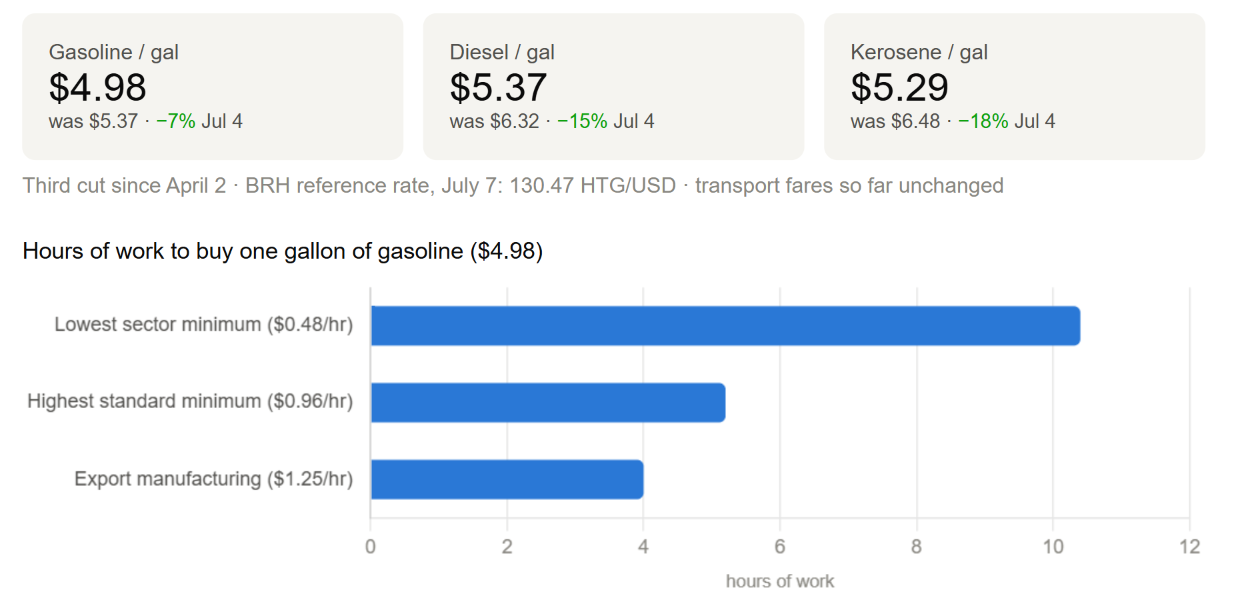
On July 4, the Haitian government announced a third fuel-price reduction since April 2. Using the July 7 BRH reference rate, gasoline is now about $4.98 per gallon, diesel about $5.37, and kerosene about $5.29. Public transport fares remain unchanged on many routes, while transport unions, MAST, and the Ministry of Commerce and Industry reportedly discuss revisions.
The short-term economic effect is therefore limited if lower fuel costs are not passed through to consumers. These fuel costs also remain high relative to Haiti’s minimum wage: as of May 6, 2026, the minimum wage ranges from roughly $0.48 to $0.96 per hour across most sectors, with a selected export-manufacturing production wage of about $1.25 per hour, using the July 7 BRH reference rate of 1 USD = 130.4665 HTG.
7. Elections are advancing administratively, but security and access remain core constraints.
The Haitian government and the Provisional Electoral Council reportedly agreed on a $120 million electoral budget after earlier proposals ranging from $200 million to $250 million were rejected. This is an important administrative step, but it does not resolve implementation risks.
The central issue is whether citizens, candidates, electoral workers, observers, and journalists can move safely throughout the country. Electoral planning requires security benchmarks, campaign-finance safeguards, voter-access planning, anti-money-laundering enforcement, and clear criteria for assessing conditions. Armed groups that control territory, checkpoints, transport corridors, and local economies could affect candidate access, voter participation, campaign financing, or the credibility of results.
8. TPS developments add legal and economic uncertainty.
The U.S. Supreme Court’s June 25, 2026, decision in Mullin v. Doe cleared the way for the administration to terminate TPS for Haiti by reversing lower-court orders that had paused the termination. USCIS has temporarily extended certain Haiti TPS-related work permits through July 10, 2026, but the ruling creates immediate legal, employment, and removal risks for Haitian TPS holders who lack another form of immigration relief.
For Haiti, the issue extends beyond legal status. Many households receive diaspora income used for food, education, rent, health care, small business activity, and construction. Reporting highlights concerns that TPS termination could affect remittance flows, household consumption, and economic stability.
90-Day Outlook
Over the next 90 days, Haiti’s trajectory will depend on whether security operations produce sustained access gains. The Gang Suppression Force’s performance should be judged by whether roads, ports, markets, hospitals, schools, and humanitarian corridors become more reliable, not only by patrols, arrests, or weapons seizures.
Election planning, TPS developments, remittance flows, transport costs, and exchange-rate movement could all affect household resilience. The potential for large-scale deportations or forced returns of Haitian TPS holders would add another layer of pressure, particularly if returnees arrive without adequate housing, employment, documentation, or family-support systems in Haiti.
Source and Attribution Disclaimer
This publication is an analytical digest prepared by Haiti Policy House. It synthesizes third-party news reporting, public statements, official data, and open-source materials reviewed during the reporting period. The underlying news items were not originally reported by Haiti Policy House unless specifically noted.
Haiti Policy House provides analysis and policy interpretation to support situational awareness. Original reporting, quotations, and factual claims should be attributed to the cited outlets, agencies, or institutions. Unless otherwise stated, Haiti Policy House has not independently verified every incident described in external reporting. Fatalities analysis reflects Haiti Policy House’s review of available data through the week ending June 20, 2026.